Tuesday, November 5, 2019
Carter Cleaning Company
Carter Cleaning Centers
Jennifer Carter graduated from State University in June 2008 and, after considering several job offers, decided to do what she always planned to do—go into business with her father, Jack Carter.
Jack Carter opened his first laundromat in 1998 and his second in 2001. The main attraction of these coin laundry businesses for him was that they were capital- rather than labour-intensive. Thus, once the investment in machinery was made, the stores could be run with just one unskilled attendant and none of the labour problems one normally expects from being in the retail service business.
The attractiveness of operating with virtually no skilled labour notwithstanding, Jack had decided by 2004 to expand the services in each of his stores to include the dry cleaning and pressing of clothes. He embarked, in other words, on a strategy of “related diversification” by adding new services that were related to and consistent with his existing coin laundry activities. He added these for several reasons. He wanted to better utilize the unused space in the rather large stores he currently had under the lease. Furthermore, he was, as he put it, “tired of sending out the dry cleaning and pressing work that came in from our coin laundry clients to a dry cleaner 5 miles away, who then took most of what should have been our profits.” To reflect the new, expanded line of services, he renamed each of his two stores Carter Cleaning Centers and was sufficiently satisfied with their performance to open four more of the same type of stores over the next 5 years. Each store had its own on-site manager and, on average, about seven employees and annual revenues of about $500,000. It was this six-store chain that Jennifer joined after graduating.
Her understanding with her father was that she would serve as a troubleshooter/consultant to the elder Carter with the aim of both learning the business and bringing to it modern management concepts and techniques for solving the business’s problems and facilitating its growth.
Questions
1. Make a list of five specific HR problems you think Carter Cleaning will have to grapple with.
2. What would you do first if you were Jennifer?
Tuesday, October 1, 2019
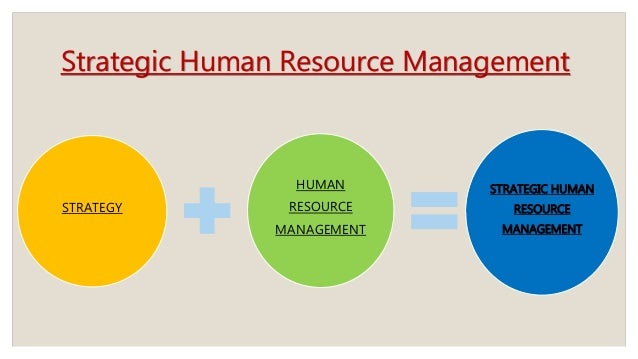
Strategic Human Resource Management
Strategic
Human Resource Management

A. What
Is Strategic Human Resource Management?
1. Strategic
HRM means formulating and executing human resource policies and practices that
produce the employee competencies and behaviors that companies need to achieve their
strategic aims.
B. Improving Performance: The Strategic Context
C. Improving
Performance: HR As a Profit Center
D. Sustainability and Strategic Human Resource
Management – today’s emphasis on sustainability has important consequences for
human resource management. HR policies
and practices can support a firm’s sustainability strategy and goals.
E. Strategic
Human Management Tools
1. Strategy Map – summarizes how each
department's performance contributes to achieving the company’s overall strategic
goal.
2. HR scorecard – a process for assigning
financial and nonfinancial goals or metrics to human resource management-related
strategy map chain of activities required for achieving the company’s strategic
aims.
3. Digital Dashboards – presents the manager
with the desktop graphics and charts, showing a computerized picture of how the
company is doing on all metrics from the HR scorecard process.
HR Metrics, Benchmarking,
and Data Analytics
A. Improving
Performance: Through HRIS: Tracking
Applicant Metrics for Improved Talent Management
B. Benchmarking
– occurs when an organization compares the practices of high performing companies’
results to your own, to understand what makes them better.
C. Strategy
and Strategy-Based Metrics – benchmarking is only part of the process. To
reveal the extent to which your firm’s HR practices are supporting its
strategic goals, strategy-based metrics are used to measure the activities that
contribute to achieving the company’s strategic aims.
D. What Are HR Audits? – these audits are a way
for an organization to measure where it currently stands and determines what it
has to accomplish to improve its HR functions.
E. Evidence-Based HR and the Scientific Way of
Doing Things – evidence-based HR is the use of data, facts, etc. to support HR
proposals, decisions, practices,
and conclusions. This requires managers to be more scientific in making
organizational decisions. This approach requires objectivity, experimentation,
quantification, explanation, prediction, and replication.
F. Trends Shaping HR: Digital and Social Media
1.
Talent Analytics – tools that enable employers to analyze, in new ways,
employee data both on obvious things (like employee demographics, training, and
performance ratings), but also data from new sources (like company internal
social media sites, GPS tracking, and email activity).
G.
Trends Shaping HR: Science In Talent
Management
V.
High-Performance Work Systems –a
set of human resource management policies
and practices that together produce
superior employee performance.
VI. Employee Engagement Guide for Managers:
Employee Engagement and Performance
A. The
Employee Engagement Problem – Gallup distinguishes among engaged employees “who
work with passion and feel a profound connection to their company,” and not
engaged employees who are essentially “checked out,” and actively disengaged
employees.
B. What
Can Managers Do to Improve Employee Engagement? – managers improve employee
engagement by taking concrete steps to do so, such as: providing supportive
supervision, making sure employees understand how their departments contribute
to the company’s success, see how their efforts contribute to achieving the
company’s goals, get a sense of accomplishment from working at the firm, and
are highly involved – as when working in self-managing teams.
Subscribe to:
Posts (Atom)